
Published:
Updated:
Verify basic company information
Start with Japan's National Tax Agency Corporate Number Publication Site to check the legal name, corporate number and registered head-office address, including available change history. This helps identify an entity but does not establish its creditworthiness.
Before signing, consider obtaining a commercial or corporate registry certificate from the Legal Affairs Bureau to verify registered representatives and details. Cross-check the company's website, products and contact information so that similarly named firms or group subsidiaries are not confused.
- Match the legal name, number, address and change history
- Confirm the representative, contracting entity and group relationships
- Compare stated activities with current contact details
Listed companies: read disclosures for business opportunities

For listed firms, review Japan Exchange Group (JPX) company information, investor relations materials, annual securities reports filed through EDINET and timely disclosures on TDnet. Always check the reporting period and publication date.
Compare revenue, operating profit and operating cash flow across several years, together with capital expenditure, R&D and overseas operations. These can indicate potential demand for materials, equipment or services, but an announced investment plan is not a purchase order.
- Identify key products, business segments and overseas activities
- Compare multi-year financial trends rather than one result
- Distinguish investment plans, implementation and actual sourcing needs
Private companies: check operations and business background
Privately held firms may not publish comprehensive financial statements or business plans. Combine registry records, company websites, product catalogs, public trade-show participation and relevant licensing information to verify operating activities and products.
For sourcing or production, ask about capacity, quality processes, samples, lead times and after-sales support. Where appropriate, review obtainable credit information, and label facts that cannot be verified as unknown. Registration alone does not prove delivery capability.
- Check consistency across offices, products and services
- Ask about capacity, quality requirements and verifiable experience
- Separate verified facts, company claims and open questions
Assess commercial fit and partnership potential
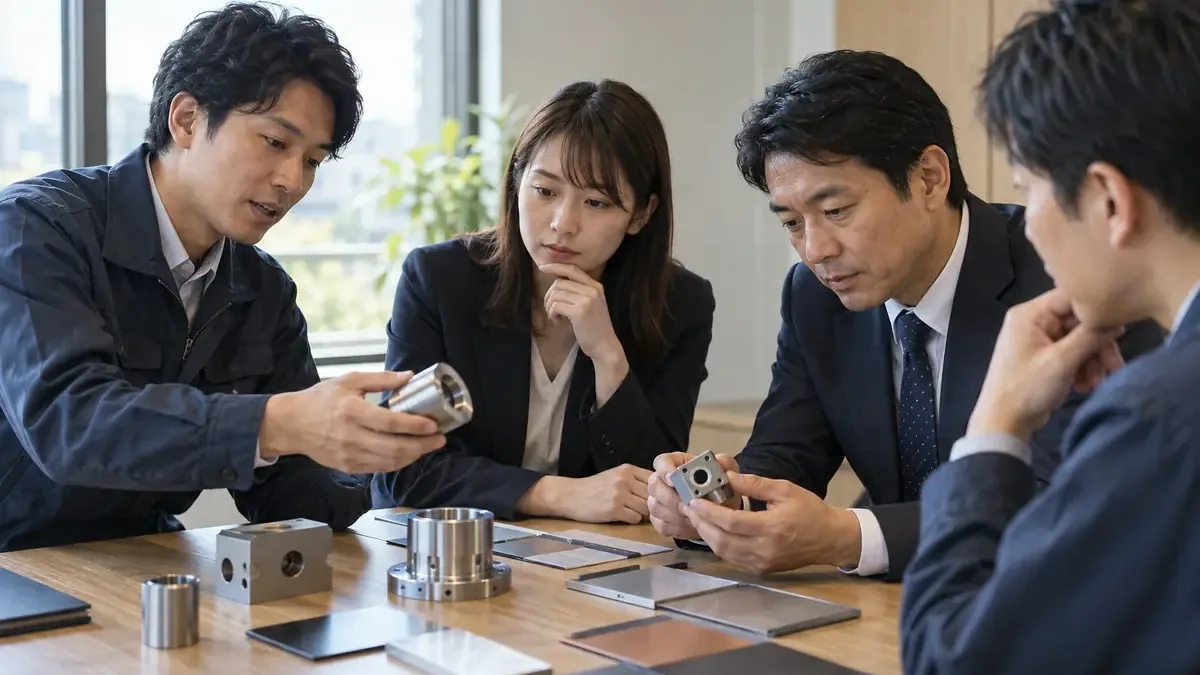
Compare candidate companies | Hypothetical examples
Separate public evidence, company statements and unanswered questions before deciding whom to approach. These examples assume a component supplier assessing prospects.
| Candidate | Evidence so far | Decision and next step |
|---|---|---|
| A | Equipment manufacturer | Relevant products on its website; investment mentioned in IR. External purchasing needs are unconfirmed. | Ask purchasing or engineering whether outside components are being considered. |
| B | Specialist distributor | Catalogue includes similar products; its import and stockholding roles are unclear. | Clarify importing, inventory and after-sales responsibilities before discussing terms. |
| C | Inconsistent company details | Business-card address differs from corporate records without a satisfactory explanation. | Pause sample dispatch and payment; verify the contracting entity, address and contact. |
Record the source and review date for each finding. Registration, investment plans and creditworthiness require separate assessments. See Japan channel development for outreach priorities.
Pre-contract checks and risk management

Before transacting, match the legal contracting party, authorized signatory, invoicing details and beneficiary account name. Record specifications, delivery, acceptance, payment milestones and each party's responsibilities in writing, even when dealing with a corporate group.
Inconsistent company details, refusal to provide essential records, unexpected changes to bank-account details or unusual pressure to pay are reasons to pause and verify.
Within an agreed scope, TUKISUMI supports Japanese company background research, partner screening and local business communications. Share your industry, target companies or specific needs through our Business Inquiry channel.
- Verify that the contracting party and payee match
- Document payment, delivery, acceptance and dispute terms
- Resolve information gaps and warning signs before proceeding